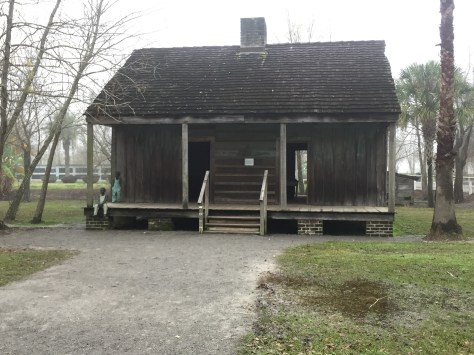
It may have been the deep fog that enveloped me. Or perhaps it was the deep sadness that held my hand and looked into my eyes as I stepped out of the car. In any other situation, this place would have been no more than a sugar cane plantation. But having the knowledge I did, the Whitney Plantation was so much more.
Off the beaten path on the banks of the Mississippi River sits the Whitney Plantation. It is one of many plantations that lines the river. While most of the plantations offer tours, I had chosen this guided tour carefully after finding out that it is the only one in the state of Louisiana that focuses on the chains of slavery endured. Most of the other plantations focus on the perspective of the slave owners and on the history of the architecture and furnishings. However, I do hear that tours of the other plantations are now beginning to include stories of the harsh lives of the slaves. The Whitney Plantation is, currently, home to the only museum in the U.S. dedicated to slavery.
While I wasn’t sure if this tour would be a suitable one for an 8 year old and a 12 year old, it was an experience I wanted them to have as I feel that there is no better experience of history (beyond history books) than being on a historical site.
I have not been to a Holocaust museum or site but I would imagine the sensation to be akin to that of being on this plantation. I learnt that the average length of time any slave lived from the moment they arrived on the plantation was 10 years, no matter how old they were when they arrived.
Arriving early, we had the opportunity to take our time to walk around the small museum and gift shop, soaking in the pictures, artefacts and information. The soul of this plantation is kept alive through the stories and quotes from the Slave Narratives Collection where former slaves were interviewed between 1936 and 1938.
The tour began with Ali, our passionate tour guide, leading us out of the museum onto the grounds of the plantation. It was a huge step back in time, the somber silence, palpable in the air. We were led to the Antioch Baptist Church where we watched an enlightening introductory video.
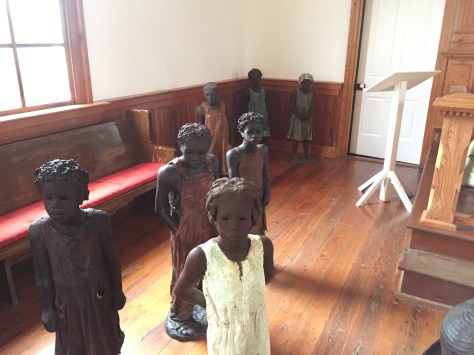
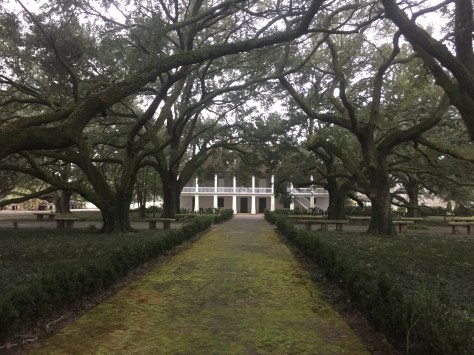
The next 90 minutes of the tour were spent walking through memorials with thousands of listed slaves’ names and quotes, the slaves’ quarters, a blacksmith shop, a pigeonnier, a mule barn, detached kitchen for the main house and the main house. The memorials include The Field of Angels (slave memorial dedicated to Louisiana slave children), the Allees Gwendolyn Midlo Hall (memorial dedicated to slaves in Louisiana) and The Wall of Honor (dedicated to the slaves who lived on the Whitney Plantation). Our tour guide, Ali, was full of information and thought provoking statements that linked the past to what is currently happening in the world.
Walking through the grounds evoked such strong emotions. Amidst listening, reading and taking photos, there were so many times I had to hold back tears. The 12 year old was focused on capturing information for her National History Day project. The 8 year old fluctuated between being tired, hot and emotional. I do not know how much of it she fully understood but there was so much sadness on her face that we had to keep giving her hugs. She kept saying, “I feel so sad, Amma.” I believe that a child feels beyond.
After the tour concluded, the whole group went back into the gift store. I had decided that I wanted to take one more photo before returning and so the 8 year old and I walked to the intended location. Being the last tour group for the day, the plantation was now void of visitors and staff. We kept looking at each other, feeling something that we could not put our fingers on. Hastening our steps on the way back while trying not to slip on the moss, I felt the sorrow and despair grabbing at me and the lump in my throat making it hard to breathe.
After having read so many books and watched movies with themes of slavery on plantations, it is hard for me to put fully into words the surreal experience that the visit to the Whitney plantation was. It is so hard to comprehend how one human can treat another, and many others, in unthinkable and inhumane ways. It is perhaps the gift and also the downfall of the human race, the ability to think, but to forget to feel. It may be a comfort to live in an oblivion using the prefix, “back then”. But do you know what saddens me to my core? Slavery and inhumanity are alive and well. I know this to be true. And yet, I have to remind myself and teach my children not to judge a whole race by its wrongdoers. No race is without them. No race is only them.




 P. S. Bavani